What Cities Hold
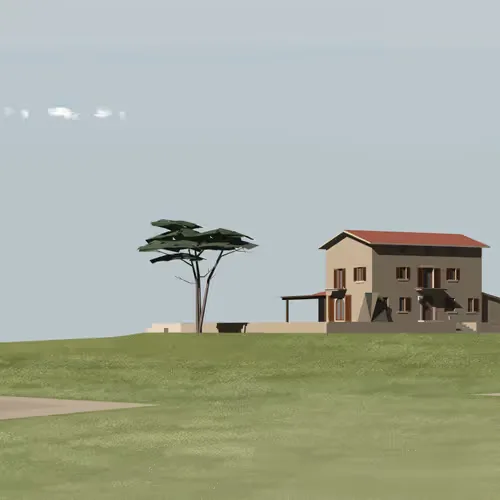
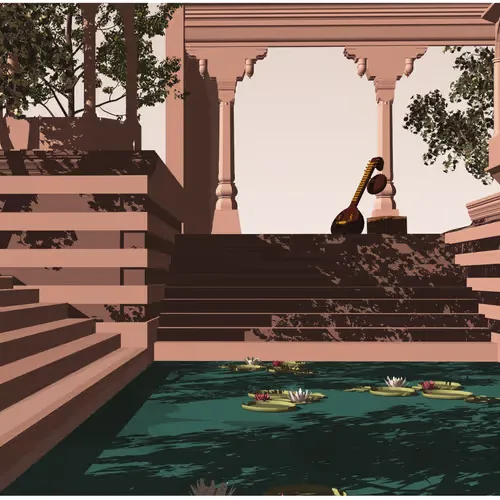
SigmaX makes glowing cities. His What Cities Hold drop scattered its rarest 1-of-1s at random through the mint, and I will admit it, I used my statistics degree to go get two.
DeltaSauce showed me SigmaX first. One look at those glowing cities and I was in. SigmaX works out of India, on 8NAP, and What Cities Hold was a generative drop, every mint a unique one-of-one, with the rarest ones sprinkled at random through the run.
I almost never collect by the numbers. This once, I did. I studied statistics, and when I checked the mint partway through I could see which of the special pieces had already surfaced and which had not, and roughly how many mints were left. That is just a deck with cards missing, and you can count what is still in it. The rarest cities had not come out yet, the odds were better than people were treating them, so I minted, and I landed two. One of them, Beverly Hills, Arrival at the Dream, ended up featured in 24 Hours of Art.

But the piece I actually cannot stop looking at is not the trophy. It is a bridge. I grew up in the Bay Area and drove across that bridge on so many late nights that when I saw SigmaX's version it stopped being a picture and turned into a memory. I told him exactly that. That is the trick with his cities. They are not photographs of anywhere real, and still they glow like a place you have already been. The light is doing something honest about how memory works, warm and a little wrong, brighter than the night actually was.
There is a reason the light behaves. SigmaX trained as an architect, and he builds these pictures the way an architect builds, structure first, feeling arriving through precision. He works where minimalism meets neo-precisionism, treating light, form, and texture as materials that can turn an ordinary space into a place you stop in front of. His lineage runs through Edward Hopper's haunted solitude, the industrial lyricism of Charles Sheeler, and Georgia O'Keeffe finding the infinite inside the intimate. Hold those three behind the glowing cities and the whole practice comes into focus: rooms of light, drawn by someone who knows exactly where the walls are.
The process runs the same way, oldest tool first. Everything begins with sketches, working out composition and color theory on paper before any software opens. The line work then moves through CAD or Illustrator, and from there into 3D modeling, and the finished picture is an amalgamation of all of it, each medium adding what he calls the technicalities, the depth, the detailing beneath the surface. The subjects stay deliberately close to home: architecture, interiors, exterior scenes, the rooms and streets of daily life. He describes the whole practice as the art of slowing down and noticing, which is as true of looking at these pictures as it must be of making them.

The museum collaboration closes the loop. For Iconic Moments and the Museum of Art + Light he painted the kind of gallery daylight the great museum architects chase, the Getty kind, stone and glass arranged so the sun does the curating. A museum picture, hanging in a museum of pictures.

I came for the rarity math. I stayed because a stranger in another country painted a bridge I have crossed a hundred times and somehow got the feeling of it right.
More from SigmaX the full room →